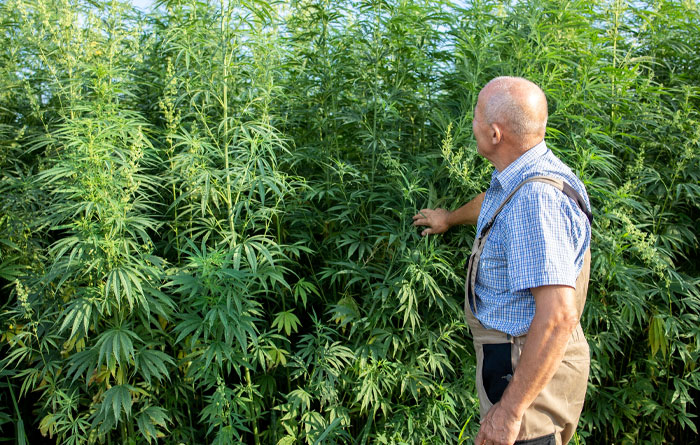
Hemp farming has become a popular topic in recent years. Many people hear that hemp is legal and assume it can be grown just like corn or wheat. Some landowners even believe that planting a few hemp plants on private property won’t cause any problems.
This misunderstanding often leads to serious legal trouble.
Even though hemp is no longer classified as marijuana under federal law, it is still a regulated crop. Growing hemp without proper authorization is illegal and can result in penalties, crop destruction, and long-term consequences.
Understanding the law before planting even one seed is extremely important.
Why is hemp cultivation still regulated?
Hemp comes from the cannabis plant family. While it contains very low levels of THC, it looks almost identical to marijuana. Because of this, authorities cannot visually tell whether a field contains legal hemp or illegal cannabis.
To prevent misuse, hemp cultivation is regulated under agricultural and federal compliance programs. Licensing allows authorities to track where hemp is grown, what seeds are used, and whether THC levels stay within legal limits.
Without this system, hemp farming could easily be misused.
Is it illegal to grow hemp without permission?
Yes, growing hemp without authorization is illegal.
Federal law allows hemp cultivation only through approved programs. Farmers and individuals must register under a state or federal hemp production plan before planting.
If someone grows hemp without approval, the law treats it as unauthorized cannabis cultivation, even if THC levels are low.
Many people assume legality means freedom. In reality, legality means permission-based cultivation.
What happens if hemp is grown without a license?
When unlicensed hemp cultivation is discovered, authorities usually act quickly.
The crop is often seized and destroyed. No compensation is provided, even if significant money was invested. In many cases, laboratory testing is performed to check THC levels, and enforcement actions follow based on the results.
Depending on the situation, individuals may receive civil penalties or face legal proceedings.
The law does not consider lack of knowledge a valid excuse.
Possible penalties for unlicensed hemp cultivation
Penalties depend on several factors, including the size of the crop and whether the activity appears intentional.
Common consequences include:
- Mandatory destruction of all hemp plants
- Financial penalties or civil fines
- Disqualification from future hemp licensing
- Official warnings recorded in government systems
In serious cases, especially if THC levels exceed legal limits, criminal charges may also apply.
What if THC levels exceed the legal limit?
Hemp must contain no more than 0.3% delta-9 THC on a dry weight basis.
If testing shows THC levels above this limit, the crop is considered non-compliant. Even licensed growers can face penalties in such cases.
For unlicensed growers, this becomes far more serious. High THC levels may cause the case to fall under drug enforcement laws rather than agricultural regulations.
This can lead to investigations, seizures, and legal action beyond farming violations.
Can someone go to jail for growing hemp without a license?
In some situations, yes.
If cultivation is large-scale, repeated, or suspected to be intentional, legal authorities may pursue criminal charges. Jail time is more likely when THC levels are above legal limits or when cultivation appears to be for distribution rather than experimentation.
While not every case results in imprisonment, the risk exists and should not be ignored.
Is home-growing hemp allowed?
Home-growing hemp without authorization is generally not allowed.
Even a small number of plants can be considered illegal cultivation. Hemp laws do not make exceptions for personal use unless the individual is licensed under an approved program.
Private property ownership does not override hemp regulations.
Why “I didn’t know” does not work legally
Many people say they were unaware that a license was required. Unfortunately, ignorance of the law is not accepted as a defense.
Before growing regulated crops, individuals are expected to understand applicable agricultural rules. Authorities assume responsibility lies with the grower.
This is why penalties are often applied even when there was no bad intention.
Why are hemp laws enforced strictly?
Strict enforcement is not meant to discourage farming. It exists to ensure safety, transparency, and compliance.
Regulation helps authorities:
- Prevent illegal cannabis production
- Monitor THC content
- Track seed sources
- Protect consumers
- Maintain industry standards
Without enforcement, the hemp industry would lose credibility and legal stability.
What should be done before growing hemp?
Anyone interested in hemp cultivation should first follow the proper legal process.
This usually includes:
- Registering under an approved hemp production plan
- Submitting land information
- Using certified seeds
- Allowing crop inspections
- Following testing requirements
These steps protect farmers and ensure long-term legality.
Is licensed hemp farming worth it?
When done legally, hemp farming can be a strong agricultural opportunity. Demand continues to grow in multiple industries, including wellness, textiles, and food production.
However, success depends entirely on compliance. Skipping licensing often leads to financial loss instead of profit.
Final thoughts
Hemp may be legal, but it is not unregulated.
Growing hemp without a license can result in destroyed crops, fines, loss of future eligibility, and, in serious situations, criminal charges.
Before planting hemp, it is essential to understand that permission is mandatory, not optional.
Following the legal process may take time, but it protects you from long-term legal and financial consequences.
When it comes to hemp cultivation, doing it the right way is the only safe way.

Sahil Sachdeva is the Founder of curemedoc.com and a Digital Marketing professional with years of experience. If you need help with content writing and want to increase your website ranking, connect with him, as he has some premium websites where you can share blogs with DoFollow links and increase your website’s ranking on Google.